
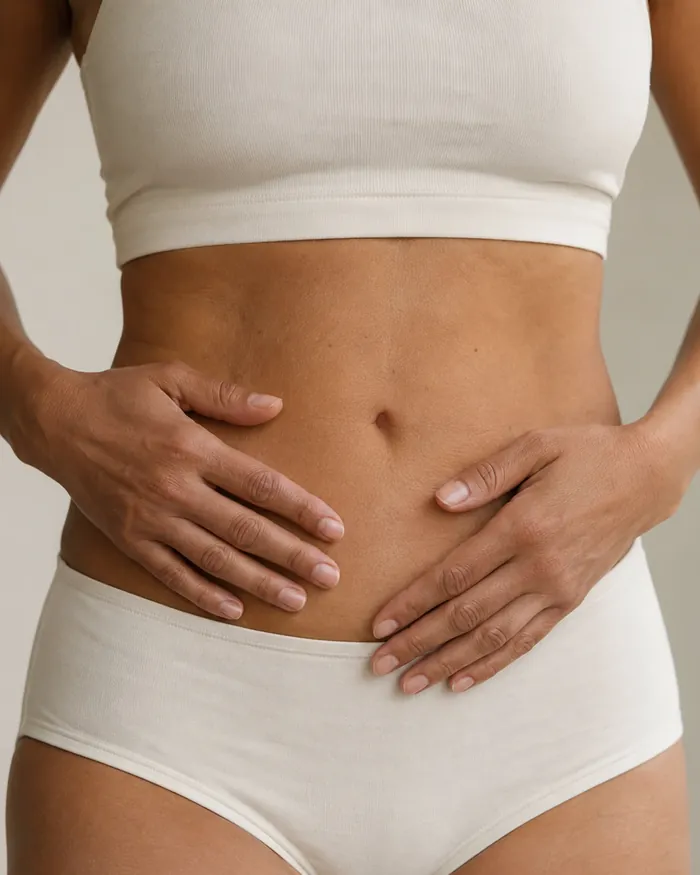
What a tummy tuck does
After pregnancy or significant weight loss, the skin of the lower abdomen may hang loosely and the stomach muscles may have separated, which exercise cannot fix. A tummy tuck (abdominoplasty) removes the excess skin and fat and can repair the muscles.
This page explains who a tummy tuck suits, the different types, your stay in Istanbul and recovery, the risks, and what the cost in Turkey usually includes.
In a full tummy tuck, an incision is made low across the abdomen, usually within the underwear line. The skin and fat between the incision and the belly button are removed, the separated muscles are stitched together (diastasis repair), and the belly button is brought out through a new opening.
A mini tummy tuck treats only the area below the belly button, with a shorter scar. It suits a smaller amount of loose skin. Liposuction of the flanks can often be combined.
A tummy tuck is not a weight loss operation. It works best when your weight has been stable for some time and you do not plan further pregnancies.
Who tummy tuck suits
Often a good fit
- Loose skin of the lower abdomen after pregnancy or weight loss
- Separated stomach muscles (diastasis recti)
- Stable weight close to your goal
- Non-smokers, or people willing to stop nicotine completely
Usually not the right choice
- A body mass index well above the healthy range, which raises risks
- Plans for further pregnancy
- People who smoke or vape nicotine
- A history of blood clots that has not been assessed
Types of tummy tuck
- Full tummy tuck
- Removes skin from above and below the belly button and repairs the muscles. The scar runs from hip to hip, low on the abdomen.
- Mini tummy tuck
- A shorter scar and skin removal below the belly button only, for limited laxity.
- Extended tummy tuck
- The incision continues around the hips to treat loose skin on the flanks.
- Lipoabdominoplasty
- Liposuction combined with the tummy tuck to refine the waist and flanks.
Your tummy tuck in Istanbul, step by step
- 1
Before you travel
Photos, your weight history, pregnancies and medical history. A video consultation to choose the type of tummy tuck.
- 2
Arrival and checks
Examination, blood tests and anaesthetic assessment. Measures to prevent blood clots are planned.
- 3
Surgery day
The operation is done under general anaesthesia. Drains and a compression garment are usually used.
- 4
Hospital stay
One or two nights in hospital, walking early with help to keep circulation moving.
- 5
Recovery checks in Istanbul
Drains are removed and wounds checked. A final review confirms you are fit to fly.
- 6
Follow-up from home
Photo and video follow-up, usually at about 1, 3, 6 and 12 months.
Preparing for tummy tuck
- Reach a stable weight you can maintain. Results are best, and risks lower, close to a healthy body mass index.
- Stop nicotine at least six weeks before and after surgery. Smokers have a much higher rate of wound problems after a tummy tuck.
- Tell the team about previous clots, a family history of clots, hormonal contraception or HRT, so that clot prevention can be planned.
- Send your list of medicines and supplements for review.
- Arrange help at home for two weeks, especially with lifting and childcare, and book flexible flights.
Tummy tuck recovery timeline
Days 1 to 3
You walk slightly bent forward to protect the incision. Pain relief and blood clot prevention as prescribed.
First week
Drains are usually removed. Short, frequent walks. Compression garment day and night.
Weeks 2 to 3
Standing straight becomes easier. Return to desk work for most people.
Weeks 4 to 6
Continue the compression garment. No heavy lifting or abdominal exercise.
Months 2 to 3
Gradual return to full exercise as advised. Swelling decreases.
Months 6 to 12
The scar flattens and fades; final shape.
Tummy tuck results: what to expect
The abdomen is flatter immediately, but swelling above the scar is normal and can come and go for three months or more. The result is settled at about six months, and the scar fades over twelve to eighteen months.
A tummy tuck removes loose skin, tightens separated muscles and narrows the waist. It is not a treatment for weight loss, it does not remove fat from inside the abdomen, and it will not remove stretch marks above the navel. The result is long lasting at a stable weight. Pregnancy or significant weight gain afterwards will stretch the tissues again.
Risks and safety
A tummy tuck is a major operation. Dr Ünal discusses these risks with you and how they are reduced.
Common and expected
- Swelling, bruising and tightness
- Numbness of the lower abdomen, which can last months
- A long scar that takes a year or more to fade
Less common
- Fluid collection under the skin (seroma) that may need draining
- Wound healing problems along the scar, more likely in smokers
- Blood clots in the legs or lungs
- Uneven contour, dog ears at the ends of the scar or a belly button that heals poorly
- Infection, bleeding and the general risks of anaesthesia
How to lower the risk
- Stop nicotine for at least 6 weeks before and after surgery
- Reach a stable weight before surgery
- Walk early and follow blood clot prevention advice
- Wear the compression garment and do not fly home before you are cleared
When to contact the team straight away
Most recoveries are uneventful. Contact us at once, and seek local emergency care if it is urgent, if you notice any of these.
- Calf pain, swelling, warmth or redness
- Chest pain, shortness of breath or coughing up blood (seek emergency care)
- A swelling under the skin that grows or feels like fluid moving
- A wound that opens, darkens, or has discharge or spreading redness
- A temperature of 38°C or higher
Alternatives to tummy tuck
Surgery is one option among several. These are the alternatives most often considered, and when each is enough.
- Liposuction
- Removes fat in people with firm, elastic skin and no muscle separation. It does not tighten loose skin.
- Mini tummy tuck
- Treats only the area below the navel, with a shorter scar. Suitable for a small group with good tone above the navel.
- Physiotherapy
- The first treatment for muscle separation after pregnancy. It improves strength and can narrow a mild gap, but cannot remove loose skin.
Tummy tuck cost in Turkey: what the price includes
The cost depends on the type of tummy tuck, whether liposuction is combined and the length of stay.
Comparing prices between clinics is only meaningful when the packages include the same things. Ask every clinic which of the items below are included.
Usually included
- Surgeon's fee and anaesthesia
- Hospital stay and operating theatre
- Pre-operative blood tests and anaesthetic assessment
- Medicines for the first days after surgery
- Compression garment
- Hotel nights as set out in your plan
- Airport, hotel and hospital transfers
- Check-ups in Istanbul and remote follow-up
Not included
- Flights and travel insurance
- Extra nights you choose to add
- Additional procedures not in your plan
Prices are confirmed individually after the consultation, in writing. How pricing works
Tummy tuck cost in Istanbul compared with the United Kingdom and the United States
| Where | Typical price | What the figure covers |
|---|---|---|
| Blanc Surgery, Istanbul | Individual written quote after your free consultationPackage price; see what is included above | Package price; see what is included above |
| United Kingdom | About £5,000 to £10,000Private clinic prices, before consultations and follow-up Source: NHS | Private clinic prices, before consultations and follow-up |
| United States | $8,174Average surgeon's fee only; anaesthesia and facility costs are extra Source: American Society of Plastic Surgeons | Average surgeon's fee only; anaesthesia and facility costs are extra |
Figures for other countries are guide prices published by the sources named, checked in November 2026. They are not quotes and do not cover the same items, so compare any two quotes line by line.
Tummy tuck abroad: travelling to Istanbul
Plan to stay in Istanbul for about 10 to 14 days after a tummy tuck. From most European cities, including London and Dublin, the flight home takes two to four and a half hours; from the Gulf around four to five; from North America around ten or more; and from Australia usually more than twenty with a connection. Longer journeys need extra care to prevent blood clots: move regularly, drink water and wear compression stockings if advised.
Before you leave, you receive a written summary of your operation that you can give to your own doctor, and you keep a direct line to the team for questions once you are home.
Plan your tummy tuck tripTravel, hotel and aftercare in detail
Tummy tuck before and after
Photographs of Dr Ünal’s patients who had this operation are shown during your consultation, with their consent. About before-and-after photos
Tummy tuck questions
How long should I stay in Istanbul after a tummy tuck?
Usually around 10 to 14 days. Flying too soon after abdominal surgery raises the risk of blood clots, so the surgeon checks you before you travel.
Will the scar be visible?
The scar sits low, usually within the underwear or bikini line. It is red at first and fades over 12 to 18 months.
Can I have a tummy tuck and a breast operation together?
This combination is sometimes called a mummy makeover. It is possible for some patients but means a longer operation and recovery, which Dr Ünal assesses individually.
What if I get pregnant later?
Pregnancy can stretch the skin and muscles again. It is best to wait until you have finished having children.
Is a mini tummy tuck enough for me?
Only when the loose skin is limited to below the belly button. The consultation will show which option gives the result you want.
How long does a tummy tuck take?
Usually two to four hours under general anaesthesia, with one or two nights in hospital.
How much weight will I lose?
Very little. The tissue removed usually weighs between one and a few kilograms. The change is in shape, not on the scales.
Can I have a tummy tuck after a caesarean?
Yes. The caesarean scar is normally removed with the excess skin, and the new scar sits at about the same level.
How long do I wear the compression garment?
Day and night for about six weeks. It supports the muscle repair and helps to control swelling.
Sources and independent guidance
Independent patient information worth reading before you decide, at home or abroad.