
Combining a midface lift with lower eyelid surgery
Why the lower eyelid and the cheek are often treated together, and what that means for recovery.

Op. Dr. Kerim ÜnalPublished , updated
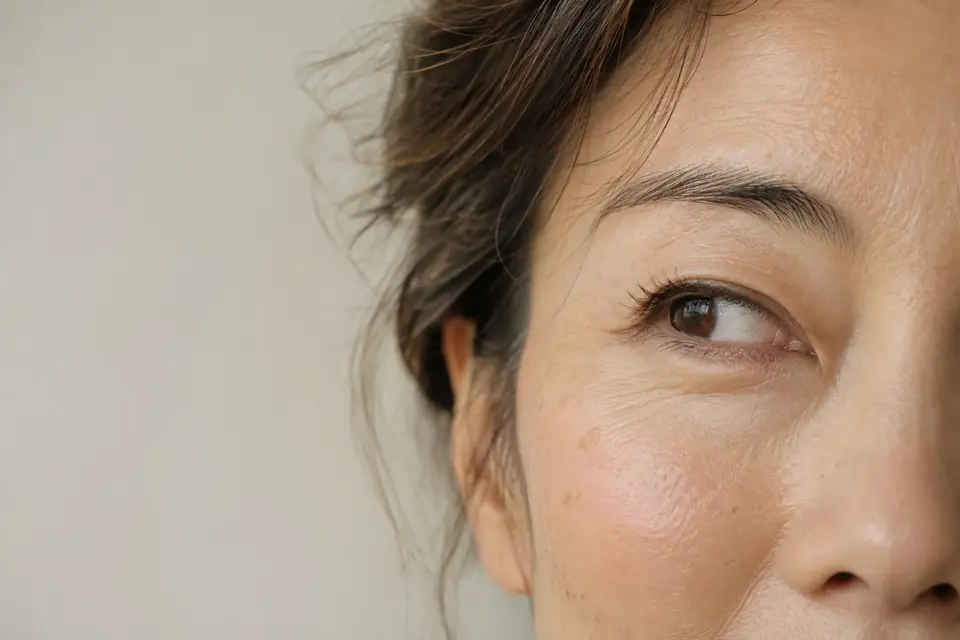
The lower eyelid and the cheek meet in one continuous area. Treating only one can leave the junction visible. Here is how a combined approach works.
Key points
- The lower eyelid and cheek age together, so they are often treated together.
- Lifting the cheek supports the lower eyelid from below.
- Protecting eyelid position is the main technical concern in this area.
The lid–cheek junction
In a young face the lower eyelid blends smoothly into the cheek. With age a groove appears between them. Above it, fat from around the eye pushes forward to form a bag. Below it, the cheek has dropped and thinned. The eye looks tired even after a good night's sleep.
Because two neighbouring areas are involved, treating only one does not always solve the problem.
Lower blepharoplasty alone
Lower eyelid surgery deals with the bag. The fat is reduced or, more often now, moved down into the groove to fill it. Loose skin can be tightened. For people whose cheek is still well positioned this is all that is needed.
When the cheek has descended, however, removing or repositioning eyelid fat can leave the groove below it looking longer and the eye hollow.
Adding a midface lift
A midface lift is usually performed through the same lower eyelid incision. The surgeon works down over the cheekbone, frees the cheek tissue and lifts it vertically, fixing it to firm tissue at the rim of the eye socket or the temple. The lifted cheek supports the lower eyelid from below and shortens the distance between lashes and cheek.
Combining the two treats the bag, the groove and the flattened cheek in one operation and one recovery.
Protecting the lower eyelid
The lower eyelid is a delicate structure, and the main specific risk of surgery here is that it is pulled downwards during healing, showing more white below the iris or, rarely, turning outwards (ectropion). Surgeons reduce this risk by:
- removing skin conservatively
- supporting the outer corner of the eyelid with a stitch (canthopexy) when the lid is lax
- lifting the cheek so that it carries weight rather than hanging on the lid
- testing eyelid tone before surgery to identify people at higher risk
Other risks include bleeding, infection, dry or watery eyes, temporary blurred vision, numbness of the cheek and asymmetry.
Recovery
Swelling in the mid-face lasts longer than after eyelid surgery alone, often two to three weeks before it is socially unnoticeable and several months before the last firmness goes. Sleep with your head raised, use the prescribed eye drops and ointment, and avoid rubbing the eyes. Stitches are removed after about a week, and a stay of 7 to 10 days in Istanbul is typical.
Contact lenses and eye make-up wait until the surgeon clears you.
The cheek lift page and the blepharoplasty page describe each operation separately. Dr Ünal can advise whether you need one or both in a free video consultation.
Frequently asked questions
Is a midface lift done through the eyelid?
Often, yes. The same incision used for lower eyelid surgery, just under the lashes or inside the lid, gives access to the cheek. Some techniques add a small incision in the temple hairline.
How long is recovery when both are combined?
Swelling lasts longer than after eyelid surgery alone: about two to three weeks before it is socially unnoticeable, with the last firmness settling over a few months.
What is ectropion?
Ectropion is a lower eyelid that turns outward, away from the eye. It is an uncommon complication of lower eyelid surgery, and conservative skin removal and lid support are used to prevent it.