
Lower eyelid surgery without visible scars
How transconjunctival lower blepharoplasty treats eye bags from inside the eyelid, and who it suits.

Op. Dr. Kerim ÜnalPublished , updated
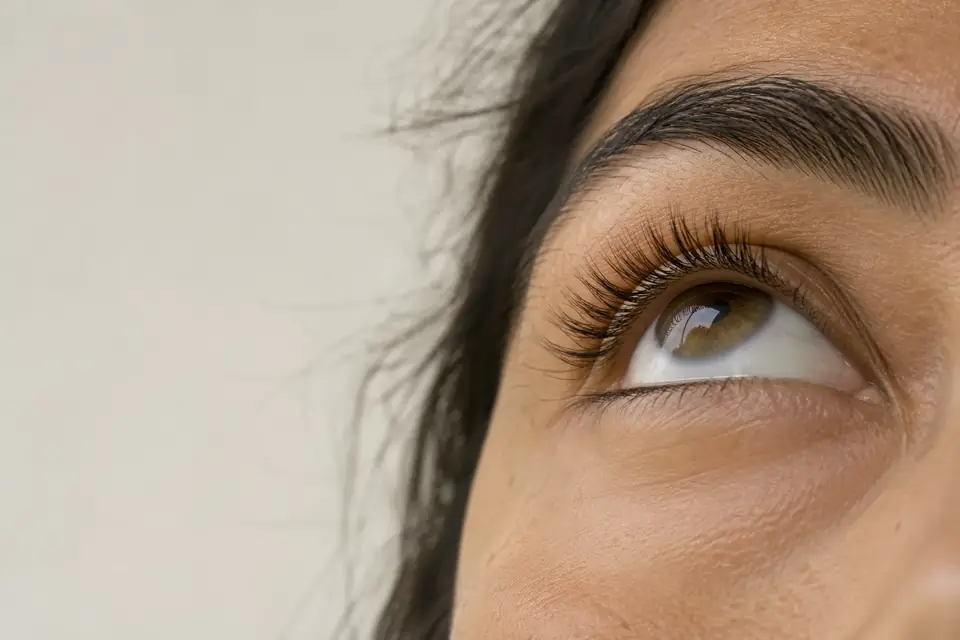
Bags under the eyes can often be treated from inside the eyelid, leaving no visible scar. This article explains the technique and its limits.
Key points
- The transconjunctival approach reaches eye-bag fat from inside the lower eyelid.
- There is no skin scar and less risk of the lid being pulled down.
- Loose skin, if present, needs a separate small step.
What causes eye bags
The eyeball sits in a cushion of fat held back by a thin membrane. With age, and sometimes by inheritance from an early age, that membrane weakens and the fat bulges forward as a bag under the eye. Bags of this kind are present all day and do not change with sleep, unlike puffiness from fluid, which is worse in the morning.
The transconjunctival approach
In transconjunctival blepharoplasty the incision is made on the inside of the lower eyelid, through the pink lining (conjunctiva). The surgeon reaches the fat from behind the eyelid, so the skin and the muscle that supports the lid are not cut.
There is no scar on the skin, and because the lid's supporting layers are untouched, the risk of the eyelid being pulled down afterwards is lower than with an external incision. The inner incision heals quickly and often needs no stitches.
Fat removal or repositioning
Once the fat is exposed it can be handled in two ways:
- Removal of a conservative amount, for a simple bag in a younger patient with a full cheek.
- Repositioning, in which the fat is released and moved down over the bony rim to fill the groove beneath the bag. This smooths the junction between eyelid and cheek and avoids a hollow look.
Taking too much fat is difficult to correct and can make the eyes look sunken years later, so the modern tendency is to preserve and reposition.
When skin also needs treatment
The inside approach does not remove skin. If the lower eyelid skin is loose or crepey, options include:
- a "skin pinch," removing a thin strip just below the lashes
- resurfacing with a laser or chemical peel to tighten the surface
- an external incision under the lashes when both muscle and skin need tightening
These add a fine external scar or a period of redness, and the surgeon will explain which is appropriate for your skin.
Recovery
Expect bruising and swelling for one to two weeks. The white of the eye may look swollen or red for some days. Use the prescribed drops and ointment, sleep with your head raised, and avoid rubbing the eyes, contact lenses and eye make-up until cleared. Around 7 days in Istanbul is usual.
Risks include bleeding, infection, dry or watery eyes, temporary double or blurred vision, asymmetry, residual or recurrent bags, hollowing and, less commonly than with external approaches, a change in eyelid position.
The blepharoplasty page covers upper and lower eyelid surgery in full. To find out which approach suits your eyelids, arrange a free video consultation.
Frequently asked questions
Does the inside incision need stitches?
Often not. The lining of the eyelid heals quickly on its own, or one or two dissolvable stitches are used.
Do eye bags come back after surgery?
Recurrence is uncommon. The area continues to age, but most people do not need lower eyelid surgery again.
Am I suitable for the scarless approach?
It suits people whose main problem is bulging fat with good skin tone, often younger patients. If the skin is loose or creased, an additional skin step is discussed.