
Extended tummy tuck after major weight loss: who needs one?
When loose skin runs round to the hips, a standard tummy tuck leaves folds at the sides. An extended tummy tuck follows the skin further.

Op. Dr. Kerim ÜnalPublished , updated
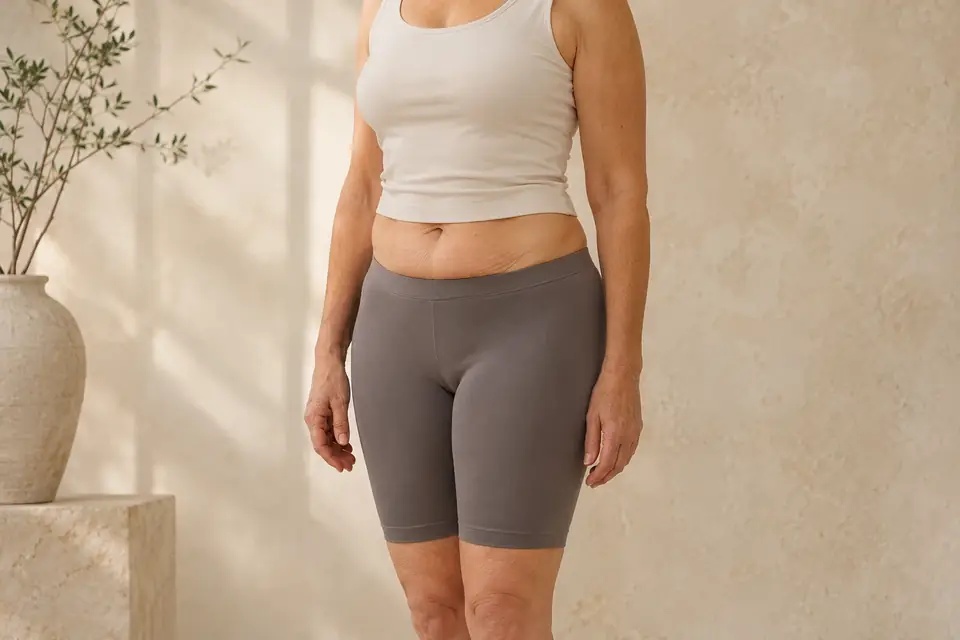
After major weight loss the loose skin rarely stops at the front of the abdomen. It carries on over the hips. An extended tummy tuck is designed for that pattern.
Key points
- An extended tummy tuck treats the abdomen and the loose skin over the hips and flanks.
- The scar is longer and runs round towards the back.
- It is planned once your weight has been stable for several months.
How it differs from a standard tummy tuck
A standard tummy tuck removes skin from the front of the abdomen through a scar from hip to hip. If there is also loose skin at the sides, closing that scar leaves a fold standing out at each end.
An extended tummy tuck continues the incision round the hips so that the skin of the flanks is removed too. The stomach muscles are repaired and the navel repositioned in the same way.

Who needs one
- Loose skin that continues past the hip bones when you look side-on
- Folds over the hips that remain when you stand straight
- Major weight loss, after injections, bariatric surgery or diet
- A stable weight and good general health
If the loose skin goes all the way round the back, a circumferential lift is a different, larger operation. Dr Ünal tells you which pattern you have after seeing photos from the front, sides and back.
The scar
The scar sits low, within underwear, and runs from the front round to the back of each hip. It is longer than a standard tummy tuck scar, and that length is what allows the sides to lie flat. It is red for some months and fades over a year or more.
Recovery
The usual plan is 7 nights in Istanbul in total. You walk slightly bent for the first week, wear a compression garment for about six weeks and avoid heavy lifting and abdominal exercise until cleared. Desk work is often possible after two to three weeks. Because a larger area is operated on, tightness at the sides and swelling last a little longer than after a standard tummy tuck.
Risks after weight loss
The risks are those of a tummy tuck: bleeding, infection, fluid collection, slow wound healing, numbness, noticeable scars and blood clots. Slow healing is more common after major weight loss, particularly when protein, iron or vitamin levels are low, so blood tests are checked beforehand. Nicotine has to stop well before and after surgery.
Getting an assessment
Send photos standing, from the front, both sides and the back, with your weight history and current medicines, in a free consultation. The plan then says which operation you need and how many nights to stay.
Frequently asked questions
Is an extended tummy tuck a bigger operation?
Yes. The scar is longer and more skin is removed, so swelling and tightness last somewhat longer.
How long should my weight be stable first?
Several months at least. Operating while you are still losing weight leaves new loose skin.
Can liposuction be added?
Often, to refine the flanks. How much is safe in the same operation is judged by the surgeon.